
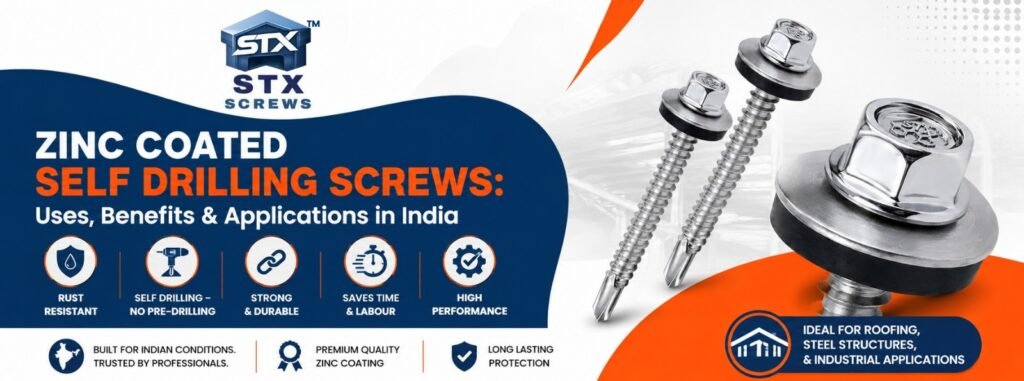
Zinc-Coated Self-Drilling Screws: Uses, Benefits & Applications in India
When metal roofing, steel framing, or fabrication projects need fast, reliable fastening, ordinary screws may not provide the right combination of installation speed and corrosion protection. Zinc-coated self-drilling screws solve this by combining a drill-point design with a protective zinc coating, making them suitable for many metal fastening applications. The need for dependable fastening is especially relevant in India, where the Ministry of Steel reports that 43% of steel demand comes from housing and construction and 25% from infrastructure.
India’s steel production also reached 164.89 million tonnes in 2025, up 10.4% from 2024, reflecting the scale of steel-intensive construction and industrial activity. In this guide, we’ll explain how zinc coated self drilling screws work, their key benefits, common applications, coating considerations, and how to choose the right screw for roofing, construction, fabrication, and industrial requirements.
For self-drilling applications, the point should be clean and properly formed. Its capacity should match the thickness and type of material being drilled.
What Are Zinc Coated Self Drilling Screws?
Zinc coated self drilling screws are metal fasteners that combine a self-drilling point with a protective zinc-based coating. The drill-point design allows the screw to create its own hole in suitable metal materials while forming the fastening connection, reducing the need for a separate pilot hole in many applications. The zinc coating provides a protective surface that can help improve resistance to corrosion, although actual performance depends on the coating system, thickness, environment, and installation conditions.
Under IS 18471:2025, drilling screws can have finishes including electroplating, hot-dip galvanizing, and zinc-flake coating, with the coating type to be declared by the manufacturer.
How do they work?
A typical installation involves:
- Drilling: The pointed tip penetrates suitable sheet metal or steel.
- Threading: The screw thread engages with the material to create the fastening.
- Securing: The head clamps the connected materials together.
- Protection: The zinc-based finish helps protect the screw surface against corrosion.
For example, a zinc coated self drilling screw can be used to fasten metal roofing sheets to suitable steel supports when its size, drill-point capacity, coating and washer configuration match the application.
It is important not to confuse coating with mechanical strength. ISO 898-1:2013 specifies mechanical and physical properties for applicable carbon-steel and alloy-steel screws, while corrosion resistance is not itself specified by that standard.
For Indian roofing, construction, fabrication and industrial projects, selecting the right screw specification for the material and environment is more important than choosing a screw based only on appearance or price.
What Is a Self-Drilling Screw?
A self-drilling screw is a fastener with a drill-shaped tip that creates its own hole while driving into materials such as metal, steel, and sheet metal. It eliminates the need for separate drilling and helps save time during installation.
Self-drilling screws provide fast, secure, and efficient fastening for construction, roofing, fabrication, and industrial applications.
What Does Zinc Coated Mean?
Zinc coated means the steel screw has a protective zinc layer on its surface. The coating can help reduce corrosion of the underlying steel, while its actual performance depends on the coating system, thickness, environment and installation conditions.
Zinc-coated screws are commonly used in construction, roofing, metalwork, and general fastening applications, especially where moderate corrosion resistance is needed.
How Do Zinc Coated Self Drilling Screws Work?
Zinc-coated self-drilling screws use their drill-shaped tip to create a hole and cut threads as you drive them into metal or other materials. This design eliminates the need for pre-drilling and speeds up installation.
The zinc coating helps protect the screw from rust and corrosion, while the sharp drilling point provides a strong, secure hold for construction, roofing, and metal fabrication applications.
Benefits of Zinc Coated Self Drilling Screws
Choosing the right screw is not only about making a connection—it is about getting reliable installation and suitable protection for the environment. Zinc coated self drilling screws combine a drill-point design with a zinc-based protective coating, making them useful for many metal fastening applications. ISO 4042:2022 covers electroplated coating systems for steel fasteners, including zinc and zinc-alloy systems that are primarily intended for corrosion protection and other functional properties.
For self-drilling applications, the point should be clean and properly formed. Its capacity should match the thickness and type of material being drilled.
Better Corrosion Protection
The zinc coating provides a protective layer that can help reduce corrosion of the underlying steel. This is particularly relevant for roofing, outdoor structures, and applications exposed to moisture. However, actual service life depends on the coating system, coating thickness, environment, and installation conditions.
Faster Installation
The self-drilling point allows the screw to drill and fasten suitable metal materials in one operation, reducing the need for a separate pilot hole. This can make installation more efficient on roofing sheets, steel framing, and sheet-metal assemblies.
Suitable for Metal Applications
These screws can be selected for applications such as:
- Metal roofing and cladding
- Steel framing and PEB structures
- Sheet-metal fabrication
- General construction
- Industrial fastening
Zinc Coated Self Drilling Screws vs Other Screw Types
Choosing the right screw is not simply about picking the strongest or cheapest option. Zinc coated self drilling screws combine a drill-point design with a zinc-based protective coating, making them useful where both installation efficiency and corrosion protection matter. ISO 4042:2022 specifically covers electroplated coating systems for steel fasteners, including zinc and zinc-alloy systems primarily intended for corrosion protection.
Zinc Coated vs Uncoated Screws
Zinc-coated screws have a protective zinc layer that improves rust and corrosion resistance, making them suitable for construction, roofing, and metalwork. Uncoated screws lack this protective layer and may corrode faster when exposed to moisture.
- Zinc Coated: Provides a protective zinc layer and can suit applications where moderate corrosion protection is required.
- Uncoated: Basic fastening option, usually better suited for dry indoor applications.
When Zinc Coated Screws Make Sense: Choose zinc-coated screws when you need added protection against moisture and corrosion.
Zinc Coated vs Stainless Steel Screws
Zinc-coated screws offer good corrosion protection at an affordable cost, making them suitable for general construction and indoor applications. Stainless steel screws provide higher corrosion resistance and work better in humid, outdoor, and demanding environments.
- Zinc Coated: Cost-effective, good rust protection, ideal for general fastening.
- Stainless Steel: Offers inherent corrosion resistance, with performance depending on the stainless-steel grade and exposure environment
- When Stainless Steel May Be More Suitable: Choose zinc-coated screws for budget-friendly applications and stainless steel screws for long-term corrosion resistance.
Self-Drilling vs Self-Tapping Screws
Self-drilling screws have a drill-point tip that can create their own hole in suitable materials. Self-tapping screws form or cut mating threads as they enter the material, and the required starting hole depends on the screw design and application.
- Self-Drilling: No pre-drilling needed; faster installation.
- Self-Tapping: Forms or cuts mating threads as it enters the material; a starting hole may be required depending on the screw design and application.
- When Self-Drilling Screws Make Sense: Choose self-drilling screws for fast metal fastening and self-tapping screws when you need greater control over the installation.
Common Applications of Zinc Coated Self Drilling Screws in India
Metal Roofing
Zinc coated self drilling screws can secure suitable roofing sheets to steel supports when the screw size, drill-point capacity, coating and washer match the application.
For exposed roofing, choose a compatible sealing washer and verify the coating requirements for the expected environment.
Steel Framing and PEB Structures
These screws can suit selected light-gauge steel framing and PEB applications when their drilling capacity and mechanical specifications match the connected materials.
Sheet-Metal Fabrication
Fabricators can use self-drilling screws for suitable sheet-metal assemblies where quick drilling and fastening can improve installation efficiency.
Construction Applications
Suitable construction applications may include metal cladding, framing and other steel components. Always select the screw according to material thickness and project requirements.
Industrial Fastening
Industrial applications may require tighter control over dimensions, material, coating and mechanical performance. Check the manufacturer’s technical specification before purchasing in bulk.
How to Choose the Right Zinc Coated Self Drilling Screw
Choosing the right zinc coated self drilling screw is not simply about picking a size that looks suitable. The screw should match the material, thickness, environment, and installation requirements. A practical selection process can prevent drilling problems, premature corrosion, and poor fastening performance.
Check the Material and Thickness
First identify what you are fastening and calculate the total material thickness the drill point must penetrate. The drill-point capacity should match the actual thickness rather than being selected by screw diameter alone.
Select the Correct Size
Choose the appropriate diameter and length based on material thickness, required thread engagement, washer thickness, and the specific application.
Consider the Zinc Coating
Zinc coating can provide corrosion protection, but the required coating depends on exposure. Indoor, outdoor, humid, coastal, and industrial environments may require different levels of protection. For exposed applications, verify the specified coating and corrosion-performance requirements rather than judging by appearance alone.
Choose the Right Head and Washer
Hex, CSK, pan, and truss heads serve different installation requirements. For roofing, a suitable sealing washer may also be important for protecting the fastening point against water ingress.
Verify Specifications
Before buying in bulk, check the manufacturer’s dimensions, material, drill-point capacity, coating, and application specifications. For example, a roofing screw and a screw for heavier steel fastening may require different designs.
Simple rule: choose the screw based on the material, thickness, environment, and required performance—not price alone.
How to Install Zinc Coated Self Drilling Screws Correctly
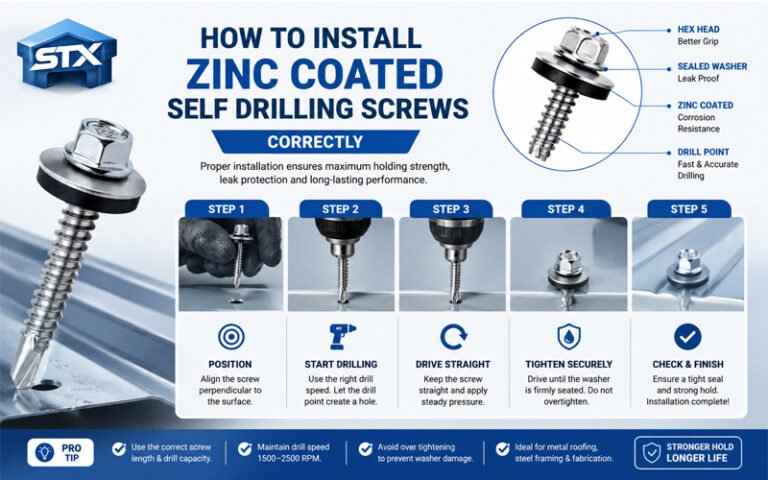
Installing zinc coated self drilling screws correctly is just as important as choosing the right screw. Even a quality screw can perform poorly if the size, drill point, tool, or installation pressure is wrong. For suitable metal applications, the self-drilling point allows the screw to drill and fasten in one operation, reducing the need for a separate pilot hole.
Prepare the Materials
Align the sheets or metal components properly before fastening. Check the material thickness and select a screw with the appropriate drill-point capacity and length.
Use the Correct Driver and Bit
Use a compatible driver and properly fitting bit to prevent damage to the screw head. Keep the driver aligned with the screw during installation.
Apply Controlled Pressure
Start the screw at the correct position and maintain steady pressure while drilling. Avoid excessive force, which can damage the drill point or coating.
Avoid Over-Tightening
For roofing applications, screws with sealing washers should be tightened enough to seat the washer correctly without crushing or damaging it. Proper installation helps maintain the intended sealing performance.
Inspect the Finished Fastening
After installation, check that the screw is properly seated, the threads are engaged, and the surrounding material has not been damaged.
Example: When fastening metal roofing sheets, select the screw according to the combined material thickness and use a suitable sealing washer for exposed areas. ISO 898-1:2013 defines mechanical and physical properties for applicable carbon- and alloy-steel screws, but it does not itself specify installation procedures or corrosion resistance.
Common Mistakes When Buying Zinc Coated Self Drilling Screws
Buying zinc coated self drilling screws based only on appearance or price can create problems during installation and over the service life of a project. The right screw should match the material, thickness, environment, coating and fastening requirements. BIS’s IS 18471:2025 standard covers drilling-screw characteristics including dimensions, thread size, length, tolerances, material, mechanical/functional requirements and finish, showing why technical specifications matter when selecting these fasteners.
Choosing Only by Price
The cheapest screw is not always the most economical. A poor-quality screw may break during installation, have inconsistent dimensions or provide inadequate corrosion protection, leading to replacement costs and project delays.
Selecting the Wrong Screw Size
Choosing the wrong diameter or length can affect thread engagement and fastening performance. Always check the material thickness, screw length and drill-point capacity before purchasing.
Ignoring Coating and Corrosion Resistance
Zinc coating provides a protective finish, but the appropriate coating depends on the environment. For example, outdoor, humid or coastal applications may require different corrosion-protection considerations. BIS’s current standard recognizes finishes including electroplating, hot-dip galvanizing and zinc-flake coating.
Using One Screw for Every Application
A roofing screw is not automatically suitable for every steel or fabrication job. Consider the head design, drill point, thread, washer and coating for each application.
Not Checking Specifications or Standards
Before placing a bulk order, verify the material, dimensions, coating, applicable standard and manufacturer specifications. A few minutes spent checking these details can prevent costly fastening problems later.
How to Check the Quality of Zinc Coated Self Drilling Screws
Not all zinc coated self drilling screws deliver the same performance. Before buying, especially in bulk, check the material, dimensions, drill point, threads, coating and quality documentation rather than judging the screw by appearance alone. BIS’s IS 18471:2025 covers drilling-screw requirements including dimensions, thread size, length, tolerances, finish and marking, making product specifications an important quality checkpoint.
Check the Material
Verify that the screw material is suitable for the intended application. For applicable carbon-steel and alloy-steel screws, ISO 898-1:2013 specifies mechanical and physical properties, although it does not itself specify corrosion resistance or coating performance.
Inspect Dimensions and Threads
Verify that the screw material is suitable for the intended application. For applicable carbon-steel and alloy-steel screws, ISO 898-1:2013 specifies mechanical and physical properties, although it does not itself specify corrosion resistance or coating performance.
Check the diameter, length, head, thread formation and drill-point design against the manufacturer’s specifications. Inconsistent dimensions or damaged threads can affect installation and holding performance.
Examine the Zinc Coating
Look for a consistent surface finish without obvious peeling, bare areas or excessive damage. Remember that zinc coating provides protection, but the expected performance depends on the coating system and exposure environment.
Check the Drill Point
For self-drilling applications, the point should be clean and properly formed. Its capacity should match the thickness and type of material being drilled.
Ask for Quality Documentation
For professional or bulk purchases, request product specifications, applicable standards, test information and quality-control details. A reliable screw is not simply one that looks good—it should have measurable specifications and be suitable for the application.
Why Choose STX Zinc Coated Self Drilling Screws?
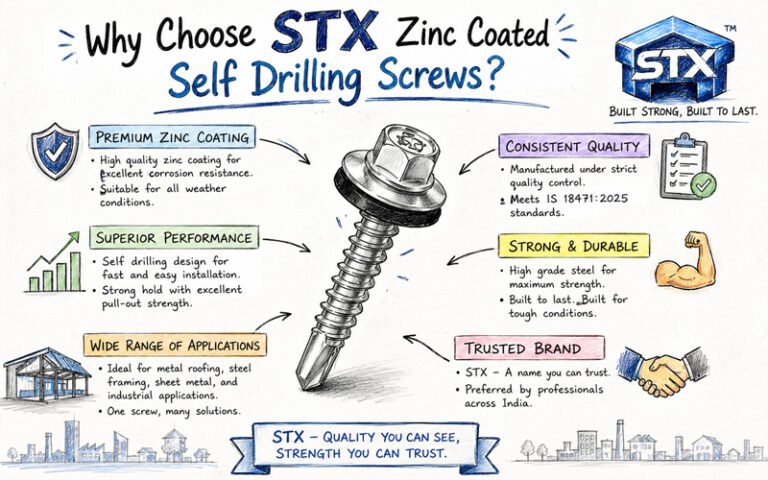
Choosing zinc coated self drilling screws is not only about getting a screw that can drill quickly. For roofing, construction, fabrication, and industrial work, buyers also need consistent dimensions, suitable coating, reliable drilling performance, and a product that matches the application. STX Screws offers self-drilling and roofing screw options designed around these practical fastening requirements.
Key reasons to consider STX:
- Application-focused options: STX offers self-drilling screws in configurations such as Hex, CSK, Truss, and Pan heads for different fastening needs.
- Zinc-coated protection: Zinc-coated screws can provide a protective surface against corrosion, making coating selection important for outdoor and demanding environments.
- Faster installation: The drill-point design allows suitable screws to drill and fasten in one operation, reducing the need for a separate pilot hole.
- Roofing applications: STX roofing screws with suitable sealing washers can help create a secure fastening point while supporting weather-resistant installation.
- Product specifications: Buyers should check screw size, material, coating, drill-point capacity, thread design, and washer requirements before selecting a product.
BIS’s IS 18471:2025 standard covers drilling-screw requirements including dimensions, threads, tolerances, materials, and finish/coating. It also recognizes finishes such as electroplating, hot-dip galvanizing, and zinc-flake coating.
Ultimately, STX zinc coated self drilling screws should be evaluated based on application, specifications, coating requirements, and required performance rather than price alone.
Zinc Coated Self Drilling Screws: Are They Right for Your Application?
Choosing zinc coated self drilling screws is less about picking a popular screw and more about matching the coating, size, drill point, and head design to your application. Zinc-coated fasteners are primarily used for corrosion protection, but the level of protection depends on the coating system and the environment. ISO 4042 specifically covers electroplated zinc and zinc-alloy coating systems for steel fasteners.
| Application | What to Consider |
|---|---|
|
Metal roofing |
Screw size, drill point, washer and coating |
|
Steel framing |
Material thickness and thread design |
|
Sheet-metal fabrication |
Screw dimensions and joint requirements |
|
Outdoor use |
Coating system and exposure environment |
|
Industrial use |
Material, dimensions and applicable specifications |
The right zinc-coated self-drilling screw depends on the material, thickness, environment, and required fastening performance. Price alone should not determine the selection.
Final Verdict
Zinc coated self drilling screws offer a practical combination of drilling convenience and zinc-based surface protection for many metal fastening applications. They can work well for roofing, steel framing, sheet-metal fabrication, construction and selected industrial uses when the screw specification matches the application.
Before choosing a screw, check:
- Material and total thickness
- Screw diameter and length
- Drill-point capacity
- Zinc coating and exposure environment
- Head design and washer requirements
- Manufacturer specifications and applicable standards
For example, a roofing application may require a suitable sealing washer and coating specification, while a fabrication application may prioritize drill-point capacity, dimensions and thread engagement.
STX Screws provides self-drilling and roofing screw options in configurations such as Hex, CSK, Truss and Pan heads. Buyers should evaluate the specific STX product according to its documented dimensions, material, coating and application requirements rather than choosing solely on price.
If you need zinc coated self drilling screws for roofing, construction, fabrication or industrial applications, selecting the specification based on the actual material and working environment will help you make a more reliable purchasing decision.
FAQ
Zinc coated self drilling screws combine a self-drilling point with a zinc-based protective coating. The drill point can penetrate suitable metal materials while the coating helps protect the steel surface from corrosion.
They can suit outdoor applications when the coating system, screw specification and environmental exposure match the project requirements. Humid, coastal or highly corrosive environments may require additional corrosion-protection considerations.
Common applications include metal roofing, steel framing, sheet-metal fabrication, construction and selected industrial fastening work. The screw must match the material thickness and application.
Check the material, total thickness, screw diameter, length, drill-point capacity, coating, head design and washer requirements before selecting the screw.
Zinc coating provides a protective layer that can help reduce corrosion, but it does not make a screw permanently rust-proof. Performance depends on the coating system, coating thickness, environment, installation and surface damage.