
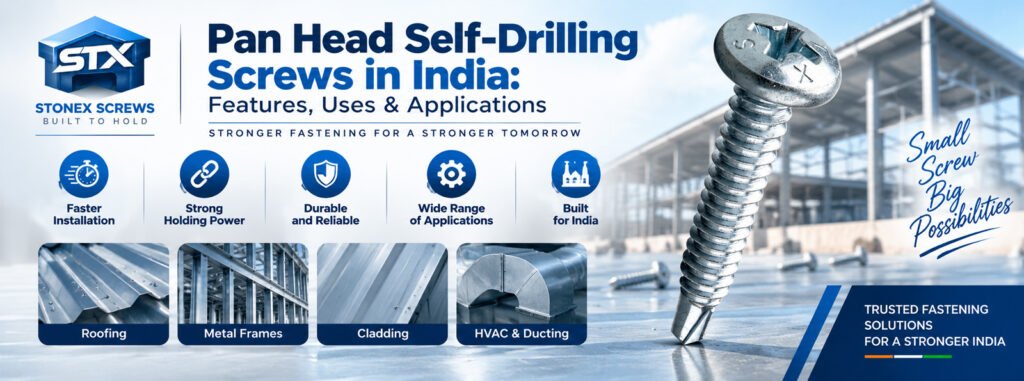
Pan Head Self-Drilling Screws in India: Features, Uses & Applications
Pan Head Self Drilling Screws in India provide a practical fastening solution for metal sheets, panels, frames, and other suitable metal applications. Choosing the right screw can help improve installation efficiency, thread engagement, and the finished joint.
These screws combine a rounded pan head with an integrated drilling point. In suitable applications, the drill point creates the hole while the threads engage the material during the same operation.
Pan Head Self Drilling Screws are commonly considered for sheet-metal fabrication, light-gauge steel framing, metal panels, roofing, and other metal fastening work. Choosing the correct diameter, length, drill-point capacity, material, and coating is important for reliable and consistent fastening.
This guide covers their features, benefits, applications, specifications, installation methods, and key selection factors to help you choose the right **Pan Head Self Drilling Screws** for your project.
What Are Pan Head Self-Drilling Screws?
Pan Head Self Drilling Screws are fasteners designed to drill and secure suitable materials in a single installation operation. They combine a rounded pan-style head with a specially formed drilling point, so a separate pilot hole may not be necessary when the screw matches the material and thickness. The drilling point creates the opening, while the threads engage the material as the screw advances.
Understanding the Pan Head Design
The pan head provides a relatively broad bearing surface and a rounded profile. This makes it useful where a flush countersunk finish is not required. Many pan head versions also use a cross-recessed drive, allowing installation with a compatible screwdriver bit.
For example, Pan Head Self Drilling Screws can be used for:
- Sheet-metal assemblies
- Metal panels and enclosures
- Light-gauge steel framing
- Fabrication work
- Suitable roofing and metal fastening applications
How the Self-Drilling Point Works
The pointed end acts similarly to a small drill. As the screw rotates, it penetrates the material and allows the thread to engage without a separate drilling step in suitable applications.
When selecting these screws, consider:
- Material thickness
- Screw diameter and length
- Drill-point capacity
- Material and coating
- Drive type
Standards and specification reference: For cross-recessed pan-head drilling screws, ISO 15481:1999 defines the relevant screw characteristics and remains a current ISO standard. In India, IS 18471:2025 covers drilling screws with tapping screw threads and specifies requirements related to dimensions, thread size, length, materials, finish, and other product requirements.
The key point is simple: the right Pan Head Self Drilling Screws should match the material, thickness, environment, and fastening requirement.
Key Features of Pan Head Self-Drilling Screws
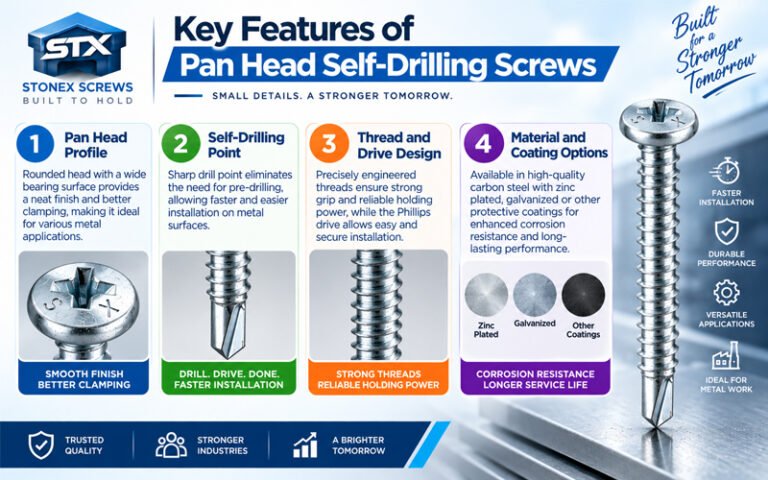
Pan Head Self Drilling Screws combine a rounded pan-style head with an integrated drill point, making them practical for suitable metal fastening applications. The drill point can create the hole and engage the material during the same installation step, reducing the need for separate drilling when the screw matches the material and thickness.
Pan Head Profile
The pan head provides a broad bearing surface against the material. For example, it can be useful when fastening sheet metal, steel framing, panels, or fabricated metal components where a raised head is acceptable.
Self-Drilling Point
The drill point is the key feature that separates self-drilling screws from ordinary tapping screws. It is designed to penetrate suitable metal and form the fastening connection without a separate pilot-hole operation.
Thread and Drive Design
The thread profile must match the application and material thickness. The drive recess also affects installation control and tool compatibility. Pan-head self-drilling screws are commonly available with cross-recessed drives such as Phillips.
Material and Coating Options
Depending on the application, pan-head self-drilling screws can be available in carbon steel, stainless steel, and different protective finishes. The appropriate material and coating should be selected according to moisture, corrosion exposure, and service conditions.
Practical example: For a metal-to-metal assembly, check the base-metal thickness, screw diameter, length, drill-point capacity, drive type, and coating before selecting the screw. Indian drilling-screw requirements are addressed by IS 18471:2025, while related international standards include ISO 15481 for cross-recessed pan-head drilling screws.
Benefits of Using Pan Head Self-Drilling Screws
Choosing the right fastener can make a noticeable difference in metal fabrication and installation work. Pan Head Self Drilling Screws combine a pan-style head with an integrated drill point, allowing suitable metal materials to be drilled, threaded, and fastened in a streamlined operation.
Faster Installation
The self-drilling point can eliminate the need for a separate pilot-drilling step in suitable applications. For example, when fixing overlapping sheet-metal panels, the screw can create the hole and form the thread as it is driven. This can simplify the workflow and reduce the number of installation steps.
Secure and Practical Fastening
The pan head provides a broad bearing surface beneath the head, helping it sit securely against the material. This makes pan head designs useful for sheet-metal assemblies, electrical enclosures, HVAC components, and other fabrication work.
Suitable for Different Metal Applications
Depending on the screw specification, these fasteners can be used for applications such as:
- Sheet-metal fabrication
- Metal panels and cladding
- Steel framing
- HVAC and ductwork
- Electrical enclosures
- General metal fabrication
Cleaner Installation Process
Using the correct drill point, screw size, and installation method helps achieve consistent fastening. The drill-point design also manages cutting and chip removal during installation, making Pan Head Self Drilling Screws a practical choice when speed and installation consistency matter.
Pan Head Self-Drilling Screws Applications
Pan Head Self-Drilling Screws are commonly used where metal components need to be joined efficiently without a separate drilling step. Their pan-style head provides a broad bearing surface, while the self-drilling point can create the required hole and engage the material when the screw is correctly matched to the application.
Sheet Metal Fabrication
These screws are useful for joining suitable sheet-metal components, panels, brackets, and fabricated assemblies. For example, they can be used in metal enclosures, electrical panels, control cabinets, and sheet-metal assemblies where a neat, accessible screw head is preferred.
Steel Framing and Metal Structures
In light-gauge steel framing, pan head self-drilling screws can connect metal framing members where the screw’s drill capacity and thread design match the material thickness. Proper selection is important for achieving consistent fastening.
Roofing and Metal Panels
They can also be used for selected metal roofing, cladding, and panel applications. However, roofing projects may require specific head, coating, washer, and sealing arrangements depending on the panel system and exposure conditions.
Other Suitable Applications
Common examples include:
- HVAC and ductwork assemblies
- Metal cabinets and enclosures
- Electrical and control panels
- Light-gauge steel framing
- Sheet-metal fabrication
- Metal panels and cladding
India’s finished-steel consumption reached 152.13 million tonnes in FY 2024–25, with housing, construction, infrastructure, engineering, and other industries driving substantial steel demand. This broader use of steel makes choosing the right Pan Head Self-Drilling Screws increasingly important for reliable metal fastening.
Always match the screw diameter, length, drill point, material, and coating to the actual application and substrate.
Pan Head Self-Drilling Screws for Metal: Choosing the Right Type
Choosing the right Pan Head Self Drilling Screws starts with the metal you are fastening and the total thickness of the joint. India’s finished steel consumption reached 152.13 million tonnes in FY 2024–25, highlighting the scale of metal use across construction and manufacturing.
Before selecting a screw, check these factors:
Base Material
Identify whether you are fastening thin sheet metal, light-gauge steel, or a thicker steel section. For example, a screw used for a metal enclosure may need a different specification from one used for steel framing.
Total Material Thickness
Measure the combined thickness of all metal layers, not just the top sheet. The drill point must have enough capacity to penetrate the complete joint before the threads engage.
Drill Point
Select the drill point according to the material thickness. A point that is too small can struggle with thicker metal, while an unsuitable larger point may not provide the desired fastening performance. Exact drilling capacity should always come from the screw manufacturer’s specification.
Material and Coating
Choose carbon steel, stainless steel, or another suitable material and coating based on the application and environmental exposure.
For example, zinc-coated Pan Head Self Drilling Screws may suit many general applications, while stainless-steel options can be considered where greater corrosion resistance is required.
In short: match the screw’s diameter, length, drill point, material, coating, and drive type to the actual fastening application rather than choosing by size alone.
Pan Head Self-Drilling Screws vs Other Screw Types
Choosing the right screw is not only about size. The head design, drill point, installation method, and material all affect how well a fastener suits the job. Here is how Pan Head Self Drilling Screws compare with common alternatives.
Pan Head vs CSK Self-Drilling Screws
A Pan Head Self-Drilling Screw has a rounded raised head that sits above the fastening surface. This makes it suitable where a visible screw head is acceptable.
A CSK self-drilling screw has a countersunk head designed for a more flush finish. For pan-head drilling screws, ISO 15481:1999 provides the relevant international reference, while ISO 15482 applies to countersunk-head drilling screws.
Example: Use a pan head for a metal panel assembly where the screw head can remain visible. Choose CSK when a flush appearance is important.
Pan Head Self-Drilling vs Self-Tapping Screws
The key difference is the point. Self-drilling screws have a drill point that can create the required hole and engage the material in a single operation when correctly specified. Self-tapping screws form their own mating thread but may require a pre-drilled or otherwise prepared hole depending on their point design and application.
Pan Head Self-Drilling vs Self-Tapping Screws
| Screw Type | Head Design | Drilling | Finish | Typical Use |
|---|---|---|---|---|
|
Pan Head Self-Drilling |
Raised pan head |
Integrated drill point |
Visible head |
Sheet metal, framing, fabrication |
|
CSK Self-Drilling |
Countersunk head |
Integrated drill point |
Flush finish |
Panels and applications needing a flush surface |
|
Self-Tapping Screw |
Various head styles |
Usually requires prepared hole |
Depends on design |
Sheet metal and general fastening |
|
Hex Washer Head |
Hex head with washer |
Integrated drill point in suitable designs |
Broad bearing surface |
Roofing, panels and metal fastening |
So, don’t choose based on the head style alone. Match the screw to the material, thickness, required finish, coating, and installation method for reliable results.
How to Install Pan Head Self-Drilling Screws
Installing Pan Head Self-Drilling Screws is straightforward when you match the screw to the material and use the correct driving technique. The self-drilling point can create the hole and form the thread during installation, so a separate pilot hole is generally unnecessary for suitable applications.
Step 1: Select the Right Screw
Before installation, check the screw diameter, length, drill-point capacity, material thickness, and coating. For example, a screw selected for thin sheet metal may not be suitable for a thicker steel section.
Step 2: Prepare the Correct Driver
Use a suitable drill/driver and drive bit that matches the screw head. Speed requirements vary with screw diameter, drill-point design, and base material, so follow the manufacturer’s specifications rather than using one speed for every screw.
Step 3: Position the Screw Correctly
Place the screw at the required fixing point and hold the driver straight against the surface. Proper alignment helps the drill point engage the metal cleanly and reduces the risk of damaging the point.
Step 4: Drill and Fasten
Apply steady pressure while the drill point penetrates the material. Once the threads engage, maintain controlled pressure and allow the screw to seat against the surface.
Step 5: Avoid Over-Tightening
Stop when the pan head is properly seated. Excessive speed can generate heat and damage the drill point, while excessive tightening can strip threads or damage the fastening surface.
Example: When fixing a metal panel to a suitable steel frame, select the correct screw length and drill point, align the screw at the fixing location, drive it through the panel and frame, and stop once the head is firmly seated.
How to Identify High-Quality Pan Head Self-Drilling Screws
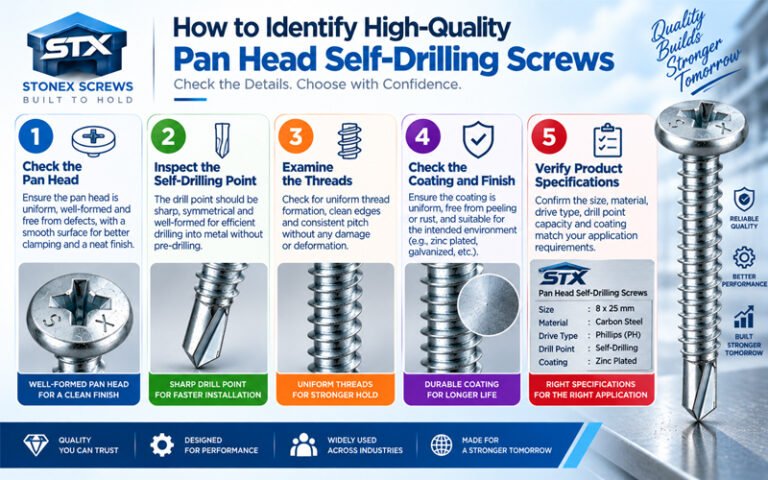
Choosing Pan Head Self Drilling Screws is not only about checking the price. A good-quality screw should have consistent dimensions, a properly formed drilling point, clean threads, and a uniform protective finish. Here are the key checks to make before purchasing.
Check the Pan Head
The pan head should have a consistent shape and clean drive recess. The driver should fit properly without excessive slipping. Uneven heads, damaged recesses, or visible manufacturing defects can indicate inconsistent production.
Inspect the Self-Drilling Point
The drilling point is critical because it creates the hole during installation. Check that the point is sharp, symmetrical, and properly formed. For example, if a screw struggles to penetrate suitable sheet metal or produces excessive deformation, verify that its drilling capacity matches the material thickness.
Examine the Threads
Look for uniform, well-defined threads without flattening or visible damage. Consistent threads help the screw engage properly with the material.
Check the Coating and Finish
A quality finish should appear reasonably uniform, without obvious peeling, flaking, or bare areas. Coating selection should also match the application’s moisture and corrosion exposure.
Verify Product Specifications
Before ordering, check the diameter, length, material, coating, drive type, and applicable drilling capacity against the manufacturer’s specification sheet. International fastener standards also define dimensional requirements for specific screw types; for example, For pan-head drilling screws, ISO 15481:1999 provides an applicable international reference for cross-recessed pan-head drilling screws with tapping screw thread. The standard remains current following it
Simple example: If you’re fastening sheet metal, don’t judge quality only by appearance—make sure the screw’s drilling capacity and dimensions are suitable for the actual material thickness.
s latest review.
Pan Head Self-Drilling Screws Manufacturer in India
Choosing the right Pan Head Self Drilling Screws is not only about finding the correct size. For consistent fastening, buyers should also consider material, thread formation, drill-point design, coating, dimensional accuracy, and the intended application. A reliable manufacturer should be able to provide clear product specifications and maintain consistency across batches.
In India, IS 18471:2025 covers drilling screws with tapping screw threads and includes requirements related to dimensions, thread size, length, material, finish, mechanical and functional properties, and marking. BIS also identifies the earlier pan-head standard, IS 18471 (Part 1):2023 / ISO 15481:1999, for cross-recessed drilling screws with tapping screw thread and pan head.
When evaluating a manufacturer, look for:
- Consistent screw dimensions and thread profile
- Properly formed self-drilling points
- Suitable steel or stainless-steel material
- Consistent coating and surface finish
- Clearly declared sizes and specifications
- Quality checks for mechanical and functional performance
For example, a manufacturer supplying screws for sheet-metal fabrication should be able to recommend a suitable diameter, length, drill point, and finish based on the material being fastened.
At STX Screws, buyers can discuss their required size, quantity, material, coating, and application to identify a suitable Pan Head Self Drilling Screw for their fastening requirements.
Pan Head Self-Drilling Screws Buying Guide
Choosing the right Pan Head Self Drilling Screws is less about picking a screw that looks suitable and more about matching the screw to the actual fastening job. Start by checking these key factors:
What to Check Before Buying
- Material: Identify whether you are fastening mild steel, sheet metal, galvanized steel, or another substrate. Material hardness can affect drilling performance.
- Total thickness: Add the thickness of all metal layers the drill point must penetrate. For example, if a joint has a thin metal sheet over a steel support, consider both layers when selecting the drill point.
- Drill point: Select a point with sufficient drilling capacity for the actual material thickness. Point numbers are not universal across every manufacturer, so check the supplier’s technical specifications.
- Diameter and length: Choose dimensions that provide suitable thread engagement without unnecessary penetration.
- Coating and material: Match the screw finish to the environment. Indoor, humid, outdoor, and corrosive conditions may require different levels of corrosion protection.
- Head and drive: Make sure the pan head and drive type suit your installation tool and application.
Example: For a sheet-metal assembly, don’t select the screw based only on diameter. Check the complete material stack, drill-point capacity, length, coating, and required thread engagement first. This simple checklist can help avoid installation problems such as slow drilling, damaged points, or poor fastening.
If you are comparing different screw designs for your project, explore the STX range of screws and fasteners to find options suited to different fastening applications.
Common Mistakes to Avoid
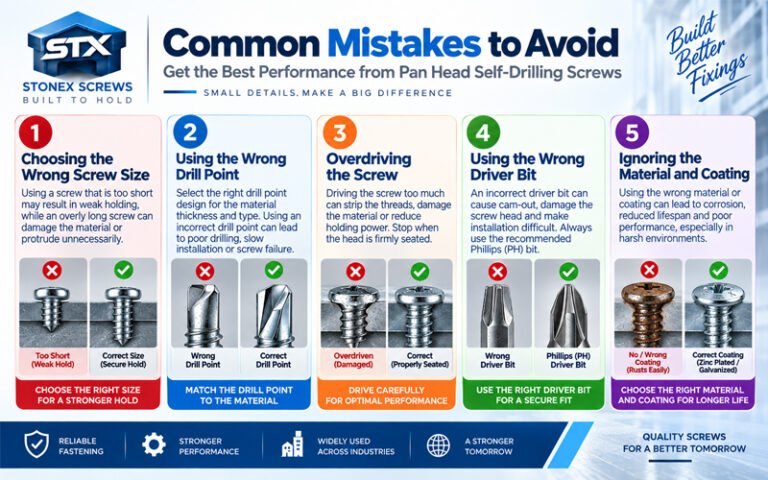
Choosing and installing Pan Head Self Drilling Screws may look simple, but small mistakes can affect drilling performance, thread engagement, and the finished joint. Here are some common problems to watch for:
Choosing the Wrong Screw Size
A screw that is too short may not provide adequate engagement, while an unnecessarily long screw can create unwanted penetration. Always match the screw length and diameter to the material thickness and application.
Using the Wrong Drill Point
Not every self-drilling screw is designed for the same metal thickness. For example, a drill point intended for thin sheet metal may struggle with thicker steel. Check the manufacturer’s drilling-capacity specifications before installation.
Overdriving the Screw
Applying excessive force or torque can strip the threads, damage the substrate, or even cause fastener failure. Use a suitable driver with controlled speed and torque.
Using the Wrong Driver Bit
A mismatched or worn driver bit can damage the pan head and make installation difficult. Use the correct bit for the screw’s drive type.
Ignoring the Material and Coating
A screw suitable for an indoor application may not be appropriate for humid or corrosive environments. Select the material and coating according to the application and exposure conditions.
Simple rule: Check the screw size, drill point, material thickness, coating, and driver settings before installation. These basic checks can prevent unnecessary rework and fastening problems.
Conclusion
Choosing the right Pan Head Self Drilling Screws is less about picking a screw that simply fits. The fastener should match the material, thickness, environment, and installation method.
The pan head provides a practical bearing surface, while the self-drilling point can simplify fastening by allowing suitable metal materials to be drilled and fastened in one operation.
Technical product data shows that drilling capacity can vary by screw design and size. Always check the manufacturer’s specifications before installation.
For example, when selecting Pan Head Screws for Metal, consider:
- Material: Carbon steel or stainless steel, depending on the application.
- Thickness: Choose a drill point capable of penetrating the material being fastened.
- Length: Allow sufficient thread engagement without unnecessary penetration.
- Coating: Select a finish appropriate for the expected environmental exposure.
- Drive type: Use the correct bit to reduce slipping and drive damage.
- Application: Consider whether the screws will be used for sheet metal, framing, panels, roofing, or fabrication.
India’s finished steel consumption reached 152.13 million tonnes in FY 2024–25, compared with 136.29 million tonnes in FY 2023–24, according to the Ministry of Steel. This highlights the scale of steel use across construction, infrastructure, engineering, and manufacturing.
Ultimately, Pan Head Self Drilling Screws are a practical choice when their specifications match the job. Before ordering, verify the required size, drill-point capacity, material, coating, and application with the manufacturer’s technical information.
FAQ
Pan Head Self Drilling Screws are commonly used for fastening suitable metal sheets, panels, frames, electrical enclosures, HVAC components, and fabrication assemblies. Their integrated drill point can drill and form threads during installation, reducing the need for a separate pilot hole in suitable applications.
Yes. They are designed for suitable metal-to-metal and sheet-metal fastening applications. However, the screw’s diameter, length, drill-point capacity, and material should match the thickness and type of metal being fastened.
Generally, the self-drilling point creates its own hole as the screw is driven. This can simplify installation, but the screw must have the correct drill-point capacity for the material thickness.
Consider these factors:
- Metal type and thickness
- Screw diameter and length
- Drill-point capacity
- Material and coating
- Drive type
- Indoor or outdoor exposure
A Pan Head Self Drilling Screw sits on top of the material with a raised head, while a CSK Self Drilling Screw is designed for a more flush finish. Choose based on the required head profile and application.