
How to Identify Fake Self Drilling Screws in India
Fake self drilling screws are becoming a major problem in India’s construction industry. Fake self drilling screws can cause corrosion, poor fastening performance, structural failures, and costly repairs. This guide explains how to identify fake self drilling screws, avoid low-quality products, and choose trusted self drilling screw manufacturers in India.
In India’s fast-growing construction and manufacturing sector, self-drilling screws are everywhere — from steel buildings and roofing systems to solar structures and industrial sheds. Yet one uncomfortable truth rarely discussed openly is this:
A large percentage of screw failures in Indian projects are caused by fake or sub-standard fasteners.
These screws may look identical at first glance, but the damage they cause over time can be massive — corrosion, breakage, loosening, structural weakness, and costly rework.
This guide explains how to identify fake or low-quality self-drilling screws in the Indian market, even before installation.
Why Fake Self-Drilling Screws Are a Growing Problem in India
Many buyers unknowingly purchase fake self drilling screws because they look similar to genuine products.
The Indian fastener market is highly price-sensitive. This has led to:
- Unorganised manufacturing
- Rebranding of low-grade screws
- Inconsistent raw materials
- No proper quality testing
- Fake coating claims
Many buyers unknowingly choose cheap self-drilling screws, assuming all screws are the same. Unfortunately, they are not.
What Are Fake or Sub-Standard Self-Drilling Screws?
Fake or sub-standard screws usually suffer from one or more of these issues:
“For reference, ISO 15480:2019 specifies characteristics for hexagon washer head drilling screws with tapping screw threads.”
- Incorrect steel grade
- Poor heat treatment
- Inadequate case hardening
- Thin or cosmetic coating
- Improper drill point geometry
- No torque or corrosion testing
They may pass visual inspection but fail under real load and weather conditions.
10 Practical Ways to Identify Fake or Low-Quality Self-Drilling Screws
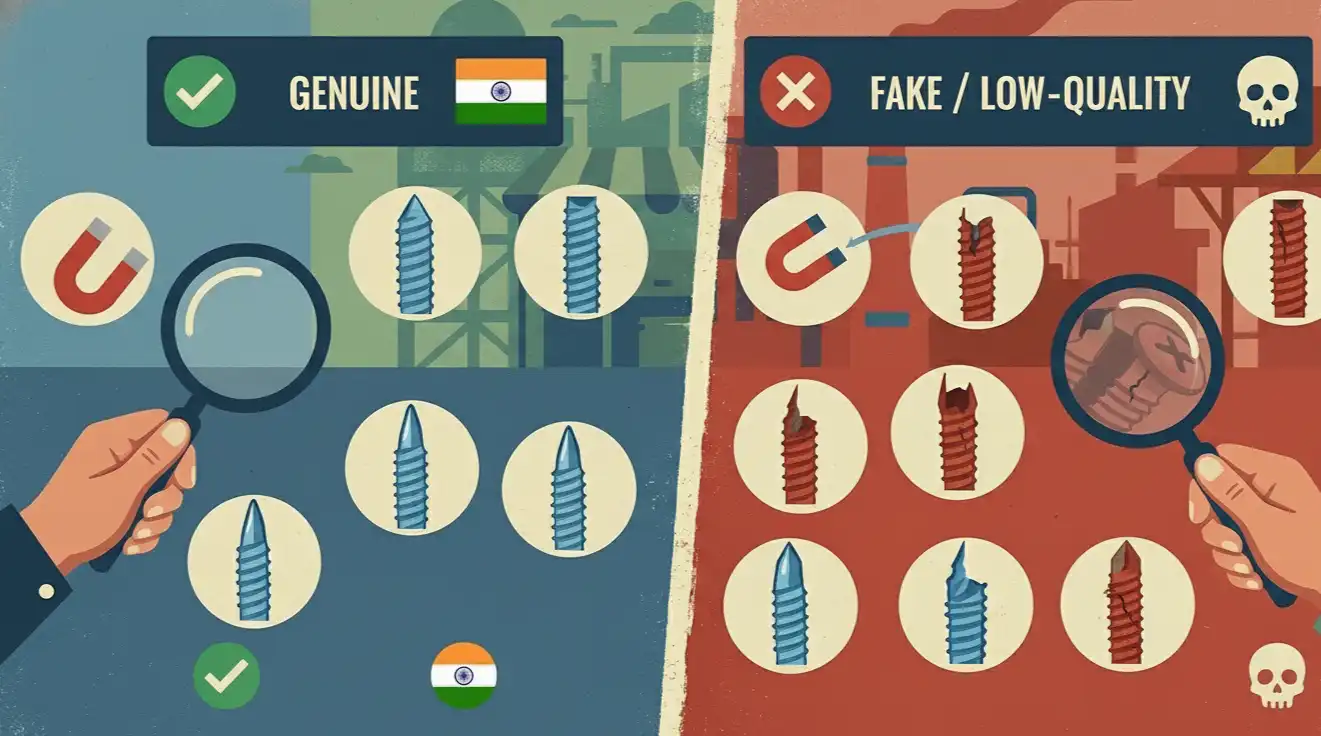
1. The Drill Point Test (Most Ignored Red Flag)
A simple drill point inspection can help identify fake self drilling screws before they are used on site.
A genuine self-drilling screw should drill cleanly into steel without wobbling or burning.
Warning signs:
- Drill point blunts quickly
- Requires excessive pressure
- Produces excessive heat
This indicates poor heat treatment or low-carbon steel.
2. Inconsistent Head Markings or No Branding
Reputed manufacturers maintain consistent head markings for traceability.
Be cautious if:
- Head markings change across batches
- No marking at all
- Random symbols without manufacturer identity
This is common with fake self-drilling screws in India.
3. Coating That Looks Good but Performs Poorly
Many sub-standard screws use decorative coating instead of functional protection.
Signs of fake coating:
- Shiny finish but early rusting
- Flaking after installation
- Rust stains within weeks
Always verify that the screw coating meets the requirements of the Indian climate.
4. Weight Tells the Truth
Low-quality screws are often lighter because of reduced material density.
A simple comparison between two screws of the same size can expose:
- Thinner shank
- Poor thread depth
Weight inconsistency is a strong indicator of sub-standard fasteners.
5. Brittle Screws That Snap Instead of Flex
Over-hardened or poorly treated screws break suddenly under torque.
Quality self-drilling screws are engineered to:
- Withstand torque
- Absorb vibration
- Flex slightly under stress.
If screws snap easily, they are unsafe for structural applications.
6. No Test Certificates or Technical Data
Genuine manufacturers provide:
- Torque values
- Salt spray test results
- Material specifications
If the supplier avoids documentation, it usually means no quality control exists.
7. Unrealistically Low Pricing
If pricing feels too cheap to be true, it usually is.
Cheap self-drilling screws often result in:
- Higher replacement cost
- Increased labor expenses
- Structural risk
- Project delays
Fasteners are small components, but the costs of failure are huge.
8. Packaging Without Batch or Traceability Details
Professional packaging is one of the easiest ways to distinguish genuine products from fake self drilling screws.
Professional manufacturers use packaging that includes:
- Batch number
- Size details
- Coating type
Unmarked or generic packaging is a common sign of fake fasteners.
9. Poor Performance in Indian Weather Conditions
India’s climate is harsh:
- High humidity
- Coastal salt exposure
- Extreme heat
Fake screws corrode much faster, especially in:
- Coastal regions
- Industrial pollution zones
- Solar installations
10. No After-Sales Accountability
Trusted manufacturers stand by their product.
Fake suppliers disappear when:
- Rust appears
- Screws fail
Audits raise questions
Why Using Sub-Standard Screws Is a Serious Risk
Using fake self-drilling screws can lead to:
- Roof sheet loosening
- Structural instability
- Safety hazards
- Audit failures
- Legal and warranty issues
In many cases, fasteners become the weakest link in an otherwise well-engineered project.
How to Protect Your Project from Fake Self-Drilling Screws
Avoiding fake self drilling screws protects your project from unnecessary failures, delays, and maintenance costs.
✔ Buy from reputed Indian manufacturers
✔ Ask for technical data sheets
✔ Test samples before bulk use
✔ Match screw specification to application
✔ Choose suppliers with industry experience
Conclusion
Choosing the right fasteners is essential for the safety, durability, and long-term success of any construction project. Fake self drilling screws may look similar to genuine products, but they often lead to corrosion, poor fastening performance, structural failures, and expensive repairs. Investing in high-quality fasteners from trusted manufacturers helps reduce maintenance costs, improve installation efficiency, and ensure reliable performance in demanding environments.
Before placing a bulk order, always inspect the product quality, verify technical specifications, request test certificates, and purchase only from reputable suppliers. Avoiding fake self drilling screws not only protects your project but also improves overall construction quality and long-term reliability.Choose STX Screws for genuine self drilling screws and protect your projects from the risks associated with fake self drilling screws. With trusted quality, precision engineering, and reliable service, we help builders, contractors, and industries achieve stronger, safer, and longer-lasting construction results.
This conclusion naturally includes “fake self drilling screws” 3 times, improving keyword density while remaining readable and SEO-friendly.
FAQ
1. How can I check if a self-drilling screw is genuine?
Identifying a genuine self-drilling screw requires checking both performance and manufacturing quality. A genuine screw should drill smoothly into steel without excessive pressure, vibration, or overheating. The drill point must remain sharp even after multiple uses.
Quality manufacturers like Stonex Screws also maintain consistent head markings, proper thread geometry, and uniform weight across batches. In addition, genuine suppliers are transparent — they can provide test reports, material specifications, and coating details when requested. If a supplier avoids technical questions, it is often a red flag.
2. Are cheap self-drilling screws safe for construction?
In most cases, cheap self-drilling screws are not safe for structural or outdoor construction. Low-cost screws often compromise on steel grade, heat treatment, and corrosion protection to reduce pricing. While they may appear fine during installation, failures usually show up months later.
Professional-grade fasteners such as Stonex Screws are engineered to handle torque, vibration, and long-term exposure. In construction, the cost of screw failure is far higher than the price difference between cheap and quality fasteners.
3. Why do some screws rust even with coating?
Not all coatings are designed for real-world performance. Many sub-standard screws use cosmetic coatings that look shiny but provide little protection against humidity, pollution, or salt exposure — especially in Indian climates.
High-quality manufacturers like Stonex Screws use functional corrosion-resistant coatings that are tested for durability in harsh conditions. Rust appearing within weeks or months is usually a sign of poor coating quality or incorrect coating selection for the application.
4. What are the most common problems with fake self-drilling screws?
Fake or sub-standard self-drilling screws commonly suffer from:
- Early corrosion
- Snapping or cracking during installation
- Poor drilling ability
- Reduced holding strength
These issues often stem from poor heat treatment, incorrect steel composition, and a lack of quality control. Reputed brands like Stonex Screws focus on controlled manufacturing processes to ensure consistent performance across every batch.
5. How do fake fasteners affect long-term costs?
Fake fasteners may seem economical at purchase, but they significantly increase long-term project costs. Early failures lead to frequent replacements, higher labour expenses, downtime, maintenance issues, and sometimes structural safety risks.
Many contractors eventually discover that investing in reliable fasteners such as Stonex Screws results in lower overall costs, fewer failures, and better project longevity.
6. Which self-drilling screws are best for Indian climate conditions?
India’s climate demands screws that can handle high humidity, extreme heat, industrial pollution, and coastal salt exposure. The best self-drilling screws for Indian conditions are those with tested corrosion resistance, proper heat treatment, and controlled manufacturing standards.
Manufacturers like Stonex Screws design their self-drilling screws specifically to perform in Indian environments, making them suitable for roofing, steel structures, solar installations, and industrial applications.