
Weather Resistant Screws for High Wind, Heavy Rain & Extreme Heat
Weather-resistant screws are designed to handle tough weather conditions such as high winds, heavy rain, extreme heat, coastal humidity, and harsh outdoor environments.
When your project faces the toughest weather — cyclones, coastal humidity, scorching summers, or heavy monsoon rains —then ordinary screws simply don’t survive. They rust, loosen, leak, and eventually fail.
That’s why builders, contractors, and roofing professionals today rely on advanced self-drilling screws, anti-rust roofing screws, and heavy-duty hex head fasteners engineered for the real-world challenges of India.
In this article, we’ll break down what makes a screw weatherproof, which types of screws work best for extreme climates, and why choosing the right manufacturer can determine the success or failure of an entire structure.
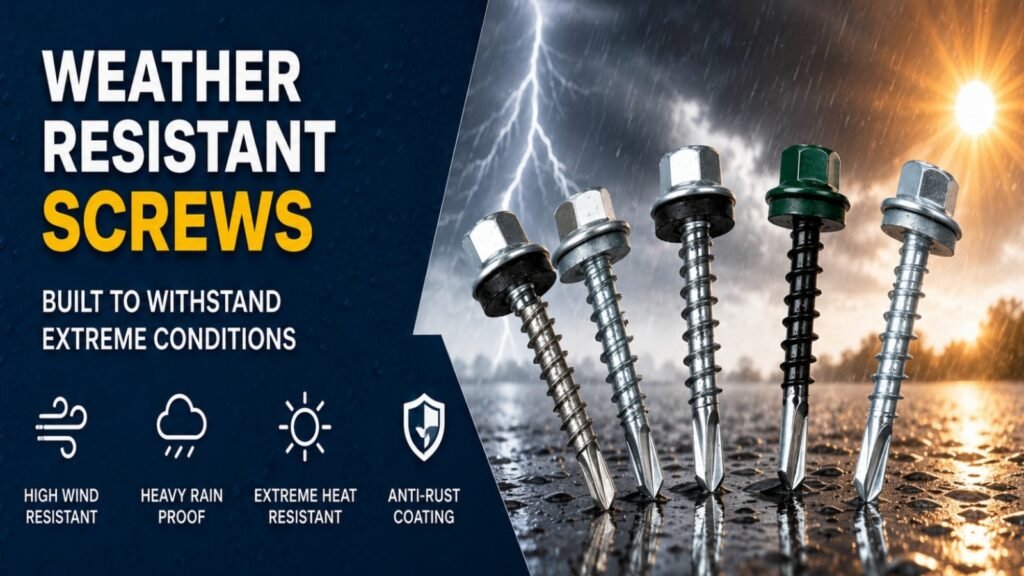
Why Weather-Resistant Screws Matter More Than You Think
Extreme weather puts enormous pressure on fasteners:
- High winds pull roofing sheets upward
- Heavy rainfall causes water seepage.
- Extreme heat expands metal, loosening poor-quality screws.
- Salt-heavy coastal air corrodes ordinary screws rapidly.
If your screws fail, your entire structure is at risk. That’s why professional builders insist on high-grip self-drilling screws, roofing screws with EPDM washers, and anti-corrosion fasteners that are built for durability.
What Makes a Screw Capable of Surviving Extreme Weather?
1. Anti-Rust Coating (Zero Rust Technology)
High-quality manufacturers in India now use:
- Zinc coating
- Ruspert coating
- Epoxy layers
- Hot-dip galvanization
Such coating protects metal fasteners from issues like rust, salt, water, and chemical exposure—resulting in a guarantee of “zero rust and zero failure,” even in a coastal environment.
2. High-Grip Threading for Wind Resistance
Thread design is the backbone of screw performance.
- Self-threading screws provide tight fastening.
- Self-tapping screws cut their own threads in metal.
- Self-drilling screws penetrate without pre-drilling
- Hex head screws for metal offer maximum torque transfer
This prevents screws from backing out during high winds or thermal expansion.
3. EPDM Washers for Leak-Proof Roofing
For roofing applications, nothing beats:
- Roofing screws with EPDM washers
- Self-drilling roofing screws
- Hex head self-drilling screws
These prevent water leakage and maintain a strong grip even during storms.
4. Hardened Steel Core for Extreme Strength
Premium manufacturers use:
- High tensile steel
- Cold-forged cores
- Heat-treated manufacturing
This results in screws that don’t crack, shear, or snap — even when drilling through heavy steel structures.
Best Screws for Harsh Weather Conditions
Based on performance, these are the top fastener types for extreme conditions:
1. Hex Head Self-Drilling Screws
Perfect for metal roofing, PEB structures, and industrial sheds.
2. SDS Screws / SDST Screws
Ideal for thick metal sheets and high-strength applications.
3. Self-Drilling Roofing Screws with EPDM
Ensures leak-proof roofing during heavy rain.
4. Anti-Rust Zinc Screws
Best for coastal, humid, and chemical-exposed locations.
5. Aluminium and Stainless Steel Screws
Excellent for long-term durability and corrosion resistance.
Why Choosing the Right Screw Manufacturer in India Matters
Not all screws are the same, and the cheaper hardware store screws tend to start rusting within a matter of months, resulting in serious roof damage.
Leading screw manufacturers in India adopt high-quality processes and advanced coating technology. Buying in bulk should take into consideration that your supplier is:
- ISO-certified
- Uses high-tensile steel
- Offers rust-proof coatings
- Provides size accuracy
- Manufactures 1-inch, 2-inch, and 3-inch self-drilling screws
Has verified dealer networks
How to Choose Screws That Survive Any Weather
When selecting fasteners for a roofing or industrial project, ensure they:
✔ Are self-drilling or self-tapping, depending on the material
✔ Come with EPDM washers for roofing
✔ Have strong hex or hexagon head screw options
✔ Are made from anti-rust coated steel
✔ Come from verified screw suppliers near you
✔ Provide manufacturer-direct pricing for bulk orders
Saving a little money on low-quality screws can cost lakhs later in structural damage.
Where to Buy Weatherproof Screws in India
Look for suppliers offering:
- Self-drilling screws from wood to metal
- Hex head screws for metal
- Roofing self-drilling screws
- High-grip drilling screws
- Premium anti-corrosion fasteners
- 1-inch, 2-inch & 3-inch self-drilling screws
- Bulk dealer and industrial pricing
If you’re searching for screws near me, ensure the dealer sources products from reliable Indian manufacturers.
Built to Last, No Matter the Weather
Whether you’re working on:
- Metal roofing
- Industrial sheds
- PEB structures
- Solar installations
- Steel fabrication
A screw in the right place truly counts.
High winds, heavy rain, and extreme levels of heat are punishing conditions. High-quality self-drilling screws, water-resistant roofing screws, and hex head anti-rust screws are meant to withstand it all.
Choose strong. Choose rust-proof. Choose quality that will last a lifetime, industry-grade quality.
FAQ
India’s climate includes extreme heat, heavy monsoon rains, strong winds, and coastal humidity. Ordinary screws can rust, loosen, or fail under these conditions, risking roof leaks and structural damage. Weather-resistant screws are designed to handle these stresses and ensure long-term safety.
Hex head self-drilling screws and SDS/SDST screws are ideal for high-wind zones. Their high-grip threads and strong torque resistance prevent loosening and pull-out during cyclones and storms.
EPDM washers create a tight, flexible seal around the screw, preventing water leakage during heavy rain. They also withstand temperature fluctuations without cracking, making them essential for leak-proof roofing.
Anti-rust zinc-coated screws, Ruspert-coated screws, hot-dip galvanised screws, and stainless steel screws perform best in coastal and high-humidity areas, where salt air accelerates corrosion.
The most commonly used sizes include 1-inch, 2-inch, and 3-inch self-drilling screws. The size depends on sheet thickness, structure type, and load requirements.